Step 1 Of 4 Choose Iso File
Download Windows 8. Pro ISO From Microsoft Without Product Key. Before now, if a person wanted to legally download Windows 8. ISO, the only way was to use the Windows 8. Setup file which had too many limitations. Even though the setup file offered options to download Windows 88. ISO, users had to enter a valid product key. The other limitation was that the setup didnt offer options to select the edition of Windows and language. In simple words, when you run the setup file on a PC running Windows 8. Pro with 3. 2 bit architecture the setup would automatically download the same edition of Windows 8. Luckily, Microsoft has addressed all the shortcomings of the setup file by releasing a free utility called Windows Installation Media Creation Tool. With Windows Installation Media Creation Tool you can download any edition of Windows 8. ISO image file without having to enter the product key, at least when youre running the tool on a Windows 8. This also means that users who dont have a valid Windows 8. Windows 8. 1 ISO. As you can see in the above image, the tool lets you all editions of Windows 8. If you want to learn how to set VMware to boot from ISO image file, you will find the answer in the article. In the following part, this text will explain the steps. PPSSPP Games Download and Install PSP Emulator and use given ISO files and play amazing playstation Games easily. GS-0uVznm0/VfAcnlsEPQI/AAAAAAAAGKw/O-EGHfcrl6c/s1600/Screenshot%2B%2528124%2529.png' alt='Step 1 Of 4 Choose Iso File' title='Step 1 Of 4 Choose Iso File' />Windows 8. Windows 8. N, Windows 8. Pro, and Windows 8. Pro N editions. The tool also offers you to download Windows 8. Single Language ISO. However, note that N edition is available in select languages only. Besides that, you can choose between 3. As with the case of original setup file, Windows Installation Media Creation Tool also allows you prepare Windows 8. USB without actually downloading the ISO file. That is, you dont need to download the ISO image first in order to prepare the bootable media. You can simply select USB option when asked to allow Windows Installation Media Creation Tool to automatically download required files and prepare the bootable USB. For those who arent sure how to use the tool, here is how to use it to download the ISO of Windows 8. Step 1 Of 4 Choose Iso File' title='Step 1 Of 4 Choose Iso File' />ISO image file. Step 1 Visit this page and click Create Media button to download Windows Installation Media Creation Tool. Its a small executable with less than 2 MB of size. Step 2 Run Windows Installation Media Creation Tool by double clicking on the executable file. WFq3OglqTQ/T9wNw-27FkI/AAAAAAAAIqs/QVWX6MvFkoY/How%252520To%252520Install%252520Windows%2525208%252520Release%252520Preview%252520from%252520a%252520USB%252520Drive%2525202_thumb%25255B6%25255D.png?imgmax=800' alt='Step 1 Of 4 Choose Iso File' title='Step 1 Of 4 Choose Iso File' />Step 3 Select the language, edition of Windows 8. Next button. Step 4 In the following screen, select USB selected by default if you want to prepare Windows 8. USB without actually downloading the ISO file. And instead if you want to download the ISO image first, please select ISO option. Note that if you select USB option, please connect your USB drive and create backup of all data before proceeding further. When asked to select your USB, please select your USB drive and then click Next button. And if you have selected ISO option, youll be asked to select a location to save the ISO file. Step 5 Depending on your internet connection speed, the time required to download the installation files vary from a couple of minutes to hours. If you have selected USB option in Step 4, Windows Installation Media Creation Tool will automatically prepare the bootable USB after downloading necessary files. Responses to How To Make An Unattend. Sysprep File Mark Says January 20th, 2011 at 1045 am. You probably should mask your product key. NTFS_File_System-Error-on-WIndows-10_1.jpg' alt='Step 1 Of 4 Choose Iso File' title='Step 1 Of 4 Choose Iso File' />UEFI Bootable USB Flash Drive. How to Create a Bootable UEFI USB Flash Drive for Installing Windows 7, Windows 8, or Windows 8. Information. This tutorial will show you how to create a Windows 7 or Windows 8 or 8. USB flash drive for UEFIfrom either a Windows 7 or Windows 88. ISO or DVD. Note. Requirements At least a 4. GB USB flash drive. Windows 7 ISO or DVD If you want to install Windows 76. Windows 8 ISO or DVD If you want to install Windows 86. Windows 8. 1 ISO or DVD If you want to install Windows 8. Set the boot mode to use UEFI and not CSM Compatibility Support Modulein your UEFI firmware settings. Temporarily disable Secure Boot in your UEFI firmware settings. Some motherboards will not boot from a USB unless you do this first. When the Windows installation is finished, you can enable secure boot if you like. How do I edit an ISO image file ISO Editor Powerful and convenient, WinISO as a professional ISO editor which helps you edit ISO or other image files. Download the latest version of Rufus at the link below, and save its. If you have fast boot or ultra fast boot enabled in your UEFI firmware if supported, then you may need to temporarily disable it until Windows has finished installing to be able to boot from a USB flash drive at boot. EXAMPLE UEFI Bootable USB Flash Drive. NOTE This is it listed in the motherboards boot menu. To Create a Bootable UEFI USB Flash Drive using Free Program Rufus. Download the latest version of Rufus at the link below, and save its. Connect your USB flash drive if you have not already. Run the rufusv. 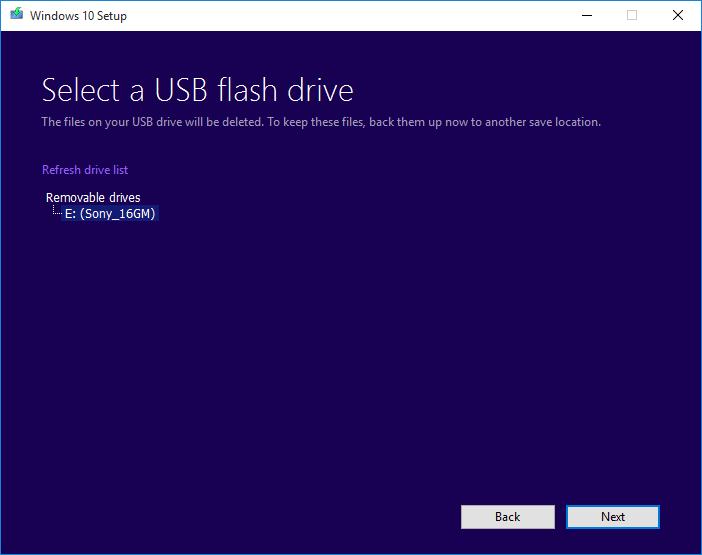 Yes if prompted by UAC. NOTE latest version number. Set Rufus with the settings below see screenshot below step 5Under Device, select the USB flash drive you want to format and use. Under Format Options, check Create a bootable disk using, clicktap on the browse icon to navigate to and select your 6. Windows 7 or Windows 8 or Windows 8. ISO file, and then make sure that Standard Windows installation is selected dotted. Under Partition scheme and target system type, select GPT partition scheme for UEFI computer. Under File system, select FAT3. Under Cluster size, select the Default ex 1. Under Format Options, check Quick format. Under Format Options, check Create extended label and icon files. Under New volume label, you can enter any name you like for the USB flash drive, or leave the default name. When ready, clicktap on Start. Clicktap on OK to confirm. Rufus will now start creating the bootable UEFI USB flash drive. When Rufus is DONE, you can close Rufus. NOTE It could take a little while to finish. You are now ready to do a clean install of Windows 7 or Windows 88. UEFI with your bootable UEFI USB flash drive. To Manually Create a Bootable UEFI USB Flash Drive. Connect the USB flash drive. Open an elevated command prompt in Windows 7 or Windows 88. In the elevated command prompt, type the commands below one at a time and press Enter after each one. Make note of the Disk ex Disk 4 for the USB flash drive. Warning. It is critical that you use the correct disk. If you do not, then you could delete the wrong drive below and lose everything on it. In the elevated command prompt, type the commands below one at a time and press Enter after each one. NOTE Substitute in the first command with the actual disk from step 4 above. For example select disk 4select disk detail disk this is to verify that you selected the correct disk before using clean belowcleancreate partition primaryformat fsfat. Make note of the volume letter ex K for the USB flash drive in the command prompt. Sim Coaster Full. Do step 8, step 9, or step 1. Windows 788. 1 ISO or DVD. Warning. It has been reported that using the downloaded Windows 8 upgrade ISO does not always give you an UEFI bootable USB option in the boot menu. If this happens to you, then use the ESD TO ISO. Simon SIW2 below to create an ISO that will work with UEFI. Afterwards, start this tutorial over using this new ISO instead. See OPTION TWO here https www. A Open File Explorer, navigate to the. Mount. see screenshot below. B The mounted. iso file will now automatically open. Select all files in it, right click or press and hold on the selected files, clicktap on Send to and the Removable Disk for your USB flash drive letter ex K from step 6 above. C This could take a bit to copy the ISO contents to the USB. D When finished, go to step 1. A If you have not already, you will need to download and install the latest alpha version of the free program 7 Zip. NOTE You can use any program that performs the same function to extract or mount an ISO, but I just find 7 Zip easier to use. B Open Windows Explorer, navigate to the. Zip and Extract files. C In the Extract dialog, click on the browse button, select the Removable Disk for your USB flash drive letter ex K from step 6 above, and click on OK, and OK. D This could take a bit to copy the ISO contents to the USB. E When finished, go to step 1. If Using a Windows 7 or Windows 88. Installation DVD. A Insert the Windows 7 or Windows 8 installation DVD into the CDDVD drive. B In the Computer window, open the DVD. C Select all files in it, right click or press and hold on the selected files, clicktap on Send to and the Removable Disk for your USB flash drive letter ex K from step 6 above. D This could take a bit to copy the DVD contents to the USB. E When finished, go to step 1. If Using 6. 4 bit Windows 7 Note Thanks to theog for this step. You do not need to do this step unless you are creating a 6. Windows 7 UEFI USB flash drive. If you are not, then go to step 1. A On the USB flash drive, copy the efimicrosoftboot folder up one level into the efi folder as efiboot. B If you have not already, download and install the latest alpha version of the free program 7 Zip, then run 7 Zip. C In 7 Zip, navigate to the sourcesinstall. WindowsBootEFIbootmgfw. USB flash drive, select the bootmgfw. OK, and close 7 Zip. D Rename the bootmgfw. E CopyMove the renamed bootx. A on the USB flash drive. You are now ready to do a clean install of Windows 7 or Windows 88. UEFI with your bootable UEFI USB flash drive.